

FAQs About Corrosion in Fasteners
Why do fasteners corrode?
The type of corrosion most people encounter occurs when metal is exposed to moisture and oxygen. Moisture acts as an electrolyte and enables electrochemical reactions at the metal surface. How corrosion develops depends on the type of metal and factors such as contaminants, material combinations, surface protection and joint design, which influence its rate and severity.
What happens to a metal during corrosion?
Corrosion can damage a metal in different ways. It may gradually remove metal from the surface, create small but deep pits or contribute to cracking. In some high-strength steels, hydrogen can accumulate in the material and cause delayed failure, even when little or no surface damage is visible.
Does corrosion always appear as rust?
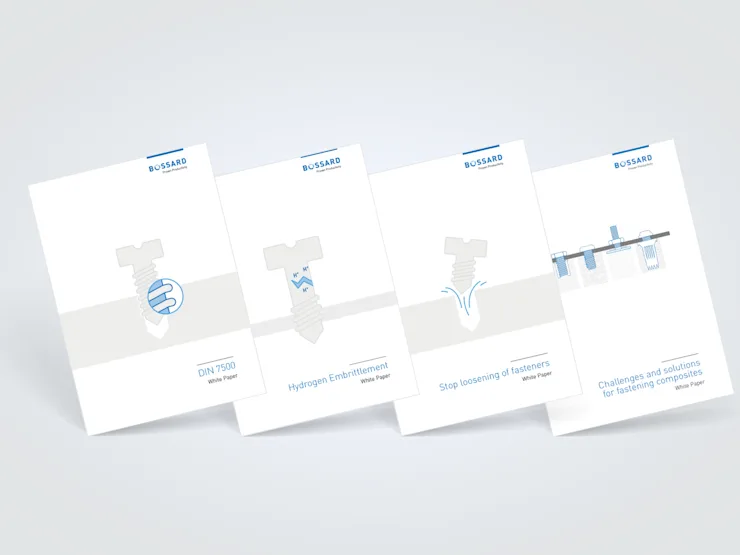
No. Red-brown rust is a visible corrosion product associated with iron and steel. It may cause uniform surface damage, localized pits or cracks that are difficult to detect. Download our white paper to learn how different corrosion mechanisms affect fasteners and fastened joints.
How can engineers reduce corrosion in fastened joints?
Engineers can reduce corrosion by selecting compatible materials and coatings, preventing moisture accumulation, improving drainage and ventilation, keeping surfaces clean and making critical joints accessible for inspection. The right approach depends on the materials, environment and mechanical requirements of the application.
At what humidity can corrosion start?
Corrosion can start at a relative humidity of approximately 60%. Salt, air pollution and restricted ventilation can increase the risk further. This means corrosion may occur even when components are not directly exposed to rain or standing water.
Which types of corrosion can affect fastened joints?
Fastened joints can experience several corrosion mechanisms, including uniform, crevice, galvanic, pitting, intergranular, and stress corrosion. The mechanism depends on factors such as material combinations, moisture, surface condition, geometry and mechanical stress. Our white paper illustrates these mechanisms and provides practical prevention recommendations.