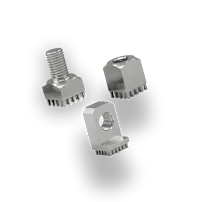

Power elements enable wire‑to‑board, board‑to‑board, and component‑to‑board connections for high currents and mechanical loads.
Fastening Technology
Power Elements: An Introduction to High-Current PCB Connectors
Rising currents, tighter spaces, tougher standards – modern PCBs demand more. Power elements offer the solution. Let’s dive into the world of high-current connectors and what engineers must know to integrate them reliably.
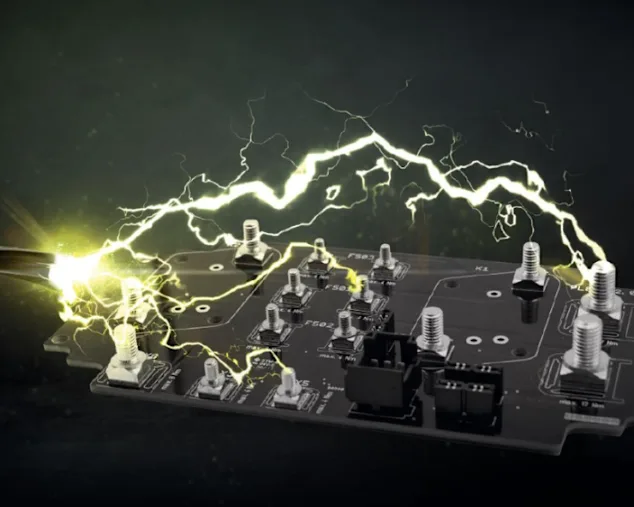
What Are Power Elements – and Why Are They Critical in Modern Power Electronics?
Power elements are robust, low‑resistance PCB hardware components that combine an electrical interface (like a threaded stud or bush, a pluggable socket/bolt, or a lamella basket) with a mechanical anchor to a printed circuit board (PCB). This dual function allows engineers to route high currents directly into or across the PCB while simultaneously providing mounting points for external components such as cable lugs. Thus, they enable wire‑to‑board, board‑to‑board, and component‑to‑board connections for high currents and mechanical loads.
Use Cases for Power Elements
Typical use cases for power elements include terminating cable lugs, mounting MIDI/Mega fuses or high‑current relays, as well as providing mechanical standoffs for heavy devices while protecting the PCB from stress. Depending on the geometry, material, termination method, and layout, single elements support hundreds of amperes and can reach up to 1,000 A within qualified designs.

Industries Where Power Elements Are Essential
Power elements are not niche components – they are critical across many industries. Some examples of key applications include:
- Automotive and E‑mobility (EV inverters, on‑board chargers, BMS, DC/DC, central electrical units, charging infrastructure): These applications need high currents, vibration resistance, and serviceability for fuses/relays.
- Renewable energy (solar/wind inverters, energy storage): In renewable energy systems, power elements provide high current distribution and field‑serviceable protection on power PCBs.
- Industrial automation and power electronics (drives, UPS, HV power supplies): Here, power elements offer robust connections and mechanical support for heavy components.
- Railway, aerospace, off‑road and heavy machinery: In harsh environments and high shock/vibration surroundings, power elements are in demand thanks to their robustness and touch/twist protection.
Different Assembly Technologies
There are different types of power elements that can be distinguished by assembly technology. Usually, they are grouped into three main termination families:
- Press‑fit: Press-fit power elements enable gas‑tight, solder‑less joints with high mechanical robustness.
- Soldered (SMT, THT, THR): Soldered power elements are suitable for high‑volume assembly. THR combines through‑holes with reflow.
- Hybrid press‑fit zones are used to optimize both torque support and power transmission.

Buy Power Elements
You are in the market for power elements? Find an overview of our product portfolio here and buy directly online.
Go to eShopChallenges in Power Element Integration (and How to Address Them)
While power elements are robust and reliable fastening elements, their performance depends on precise engineering and process discipline. Here are some of the most common challenges engineers face with power elements. Each of the following areas can directly influence long‑term reliability, electrical performance, and mechanical stability.
1. Thermal Management and Current Derating
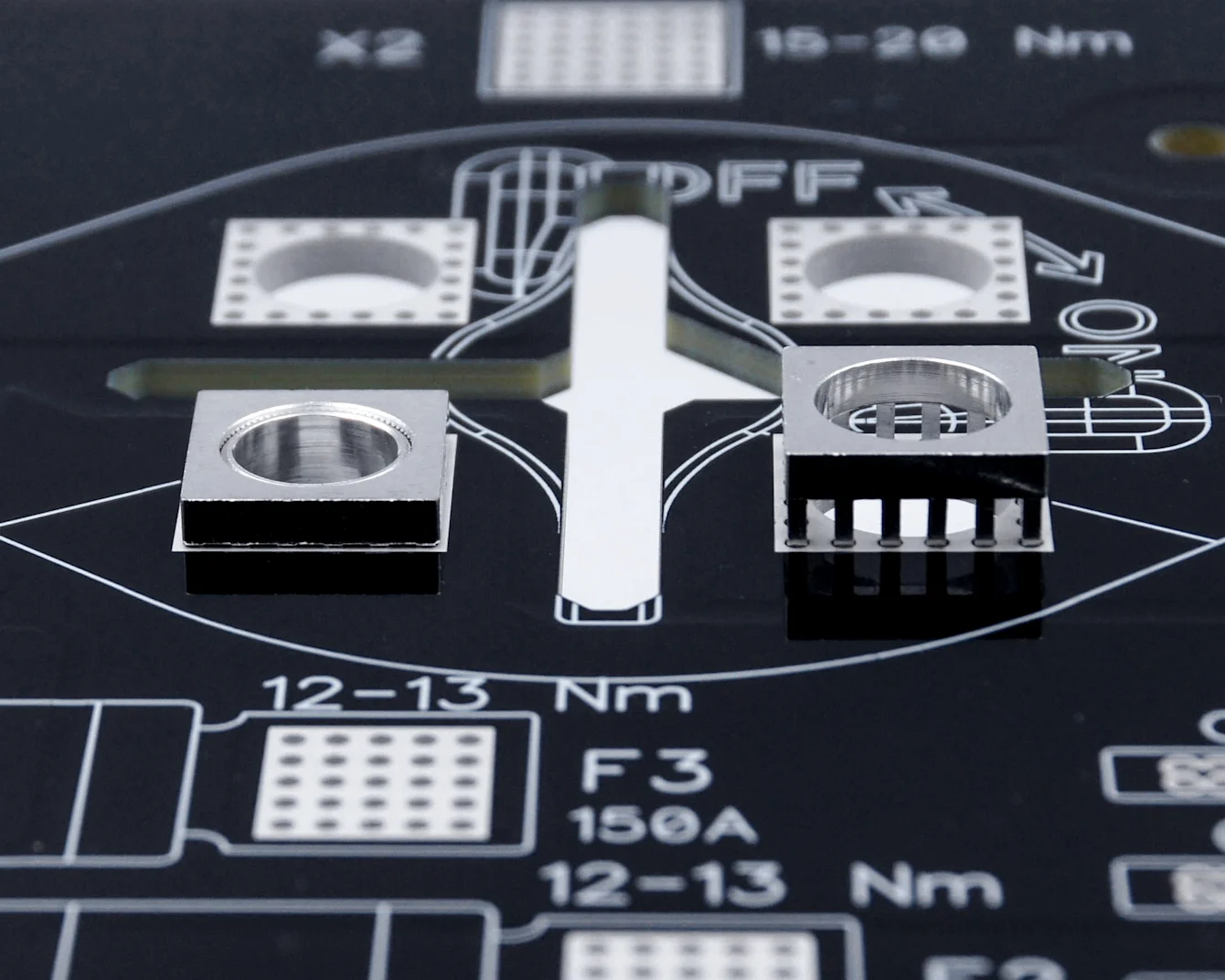
A power element’s true current capability depends on various factors, such as the layout (copper area/layers), airflow, element geometry, and mounting torque. Insufficient copper or inadequate thermal design can produce hotspots that degrade performance over time. To avoid this, derating curves provided by manufacturers must be followed closely.
2. Press‑Fit Mechanics and PCB Design
Press‑fit technology delivers exceptional reliability, but only when the PCB is manufactured to precise specifications. Key requirements include adhering to the exact drill diameter and final hole diameter, ensuring a controlled plating, and meeting the element’s defined press‑in force range.
3. Torque and Mechanical Loads
Power elements with threaded interfaces must be installed using the correct tightening torque to ensure both electrical performance and mechanical safety. Each thread size has a defined permissible torque range, depending on series and design. Over‑torque risks pad lifting or barrel damage, while under‑torque reduces the contact area. Use twist/touch protectors where adjacent lugs risk shorting.
4. Shock, Vibration, and Environmental Sealing
One of the strengths of press‑fit technology is its excellent resistance to shock and vibration, making it well suited for EV, industrial, or railway environments. However, achieving full reliability in harsh conditions requires additional design considerations. Engineers may need to use anti‑twist geometries that prevent the element from rotating during tightening, incorporate twist or touch protectors to avoid accidental short circuits when adjacent cable lugs might move, or select corrosion‑resistant plating materials for environments with high humidity, salt exposure, or chemical contamination.
5. Process Capability and Quality
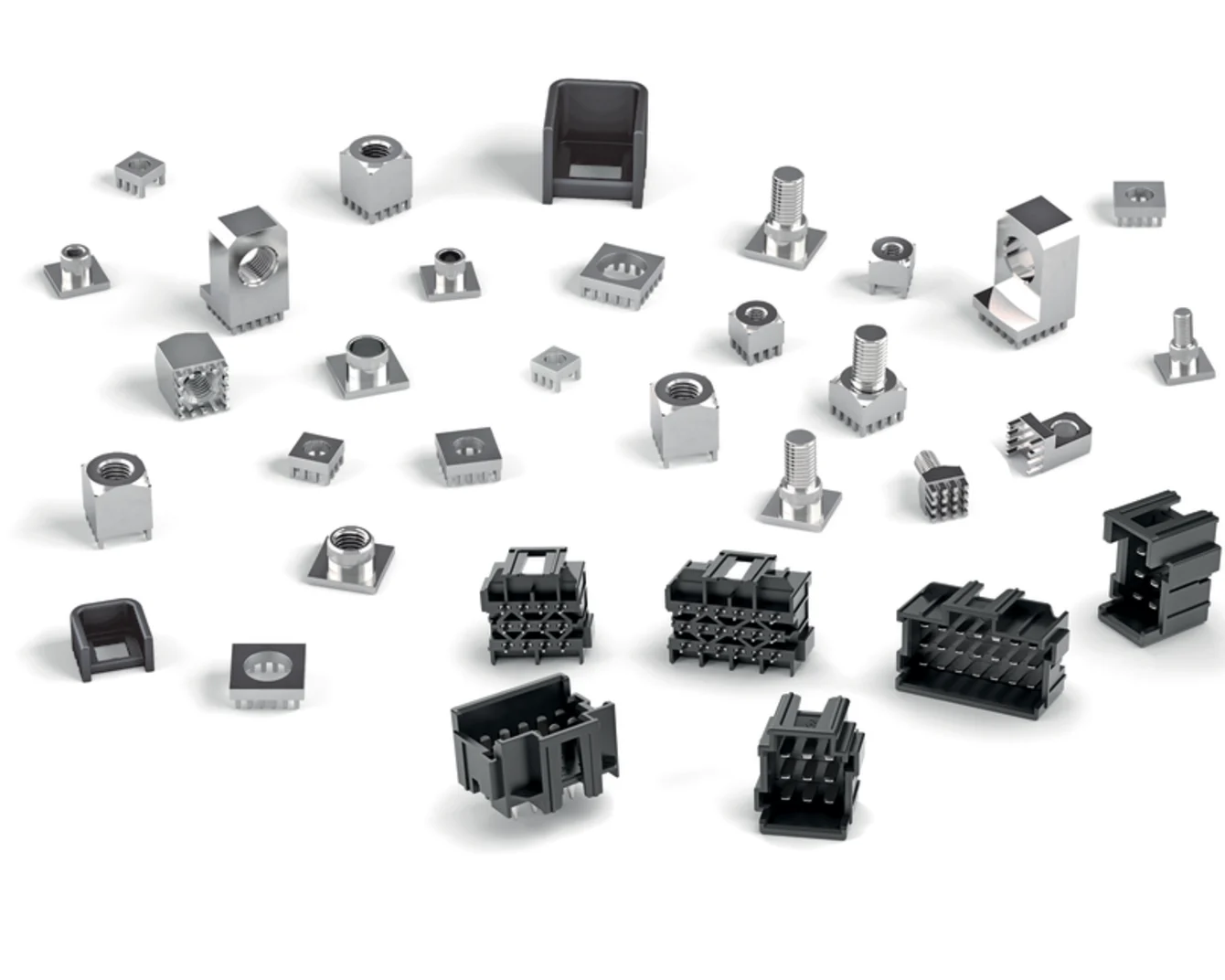
Press‑fit technology requires controlled insertion tooling and force monitoring. For SMT and THR variants, the assembly requires coplanarity and thermal profiling for heavy parts. To validate yield and long‑term reliability, many manufacturers recommend performing Design of Experiments (DOE) studies early in the development process.
6. Regulatory and Sustainability Compliance
Finally, regulatory requirements such as RoHS and REACH increasingly push manufacturers to use lead‑free materials, adopt environmentally responsible plating systems, and transition away from legacy alloys containing lead. Consider these regulations early in the design phase to avoid unexpected material restrictions or the need for costly redesigns later.
Latest Trends in Power Elements
Current developments in Power Element technology are shaped by rising performance demands, sustainability goals, and the push for more compact power electronics. Lead‑free high‑current contacts are becoming increasingly important as manufacturers work to meet RoHS requirements without compromising electrical or mechanical performance.
High‑voltage capability and safety are also gaining relevance, with application notes increasingly highlighting insulation, touch protection, and compliance with creepage and clearance requirements for next‑generation EV and renewable‑energy systems. In parallel, suppliers are introducing advanced press‑fit geometries, such as hybrid flexible‑plus‑massive zones, to reduce PCB stress, accommodate hole‑tolerance variations, and improve overall process reliability.
Finally, the trend toward digital enablement is accelerating. Comprehensive CAD libraries, 3D models, and online configuration tools are making it faster and easier for engineers to integrate power elements into their designs.
Power Elements: Key Takeaways
Power elements are must‑have building blocks for safe, serviceable, high‑current PCB architectures across EV, renewable, and industrial markets. They combine low‑loss current paths with structural robustness and field‑friendly connection schemes. Modern portfolios address compliance (lead‑free), process efficiency (press‑fit, THR) and optimized geometries.
Let's Talk About Power Elements
Whether you’re dealing with derating, layout optimization, or choosing the right power element for your application, our team is happy to help.