
Tucker Welding Studs Overview
Metric Studs
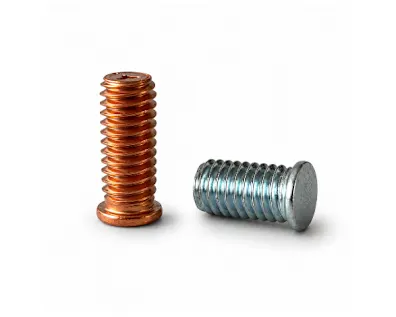
The 7° tapered welding flange is used to stabilize and center the arc, thereby contributing to flawless weld quality. The stud can be designed without a chamfer, with a chamfer, or with a nut insertion aid.
Ideal for fastening parts and components, as well as a replacement for resistance welding studs.
Materials:
- Steel wire 4.8 and 6.8 according to DIN ISO 898 Part 1
- Stainless steel wire A2 and F1 according to DIN 267 Part 11
- Brass wire CuZn according to DIN 17672 Part 1
Finishes:
- Plain, copper-plated, zinc-plated
- Additional materials and finishes available upon request
X-Mas Studs
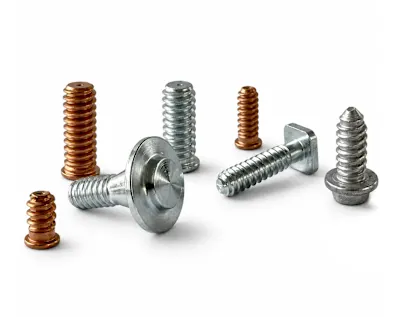
The X-Mas stud is a coarse-threaded stud specially designed for fastening plastic components. After welding, these studs can be painted and coated with a protective finish to prevent corrosion. Upon request, you can install an anti-rotation device at the end of the thread.
For fastening plastic elements used in small components, piping, snap fasteners, plastic nuts, cable clamps, and more. Quick installation by hammering or pressing in; removal by unscrewing.
Materials:
- Steel wire 4.8 per DIN ISO 898 Part 1
- Stainless steel wire A2 and F1 per DIN 267 Part 11
Finishes:
- Plain, copper-plated, zinc-plated
- Additional materials and finishes available upon request
Aluminum X-Mas Studs
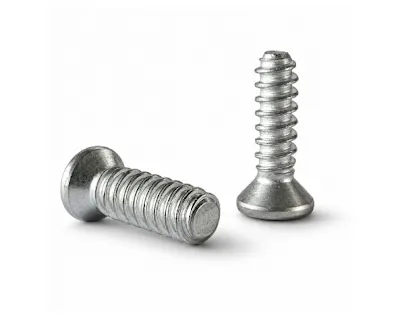
The coarse-threaded aluminum stud was specifically designed for fastening plastic parts. It is available with or without a chamfer and is characterized by its low weight.
For plastic fasteners on small components, piping, snap fasteners, plastic nuts, and cable clamps. Quick installation by tapping or pressing in; removal by unscrewing or pulling out.
Materials:
- Aluminum wire AlMg per DIN EN 1301-2
Finishes:
- Plain uncoated
- Other materials and finishes available upon request
Metric Paint-Clear Studs
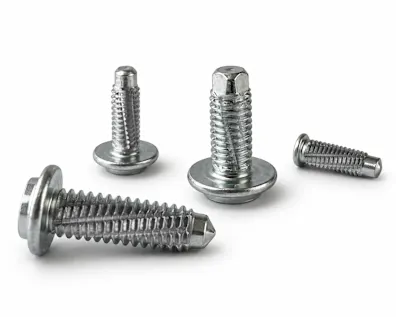
The metric threads on these studs feature cross grooves that remove excess paint as the nut is tightened. The threads can be painted over without any problems—eliminating the need for time-consuming and labor-intensive masking. No post-processing or cleaning of the threads is required.
For fastening components to painted bolts. For thermally stressed areas, as a replacement for resistance-welded studs, insert screws, and self-tapping nuts.
Materials:
- Steel wire grades 4.8 and 6.8 per DIN ISO 898 Part 1
Finishes:
- Copper-plated, zinc-plated
- Other materials and finishes available upon request
Welding Pins
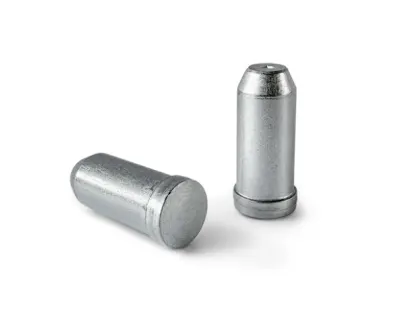
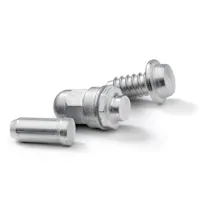
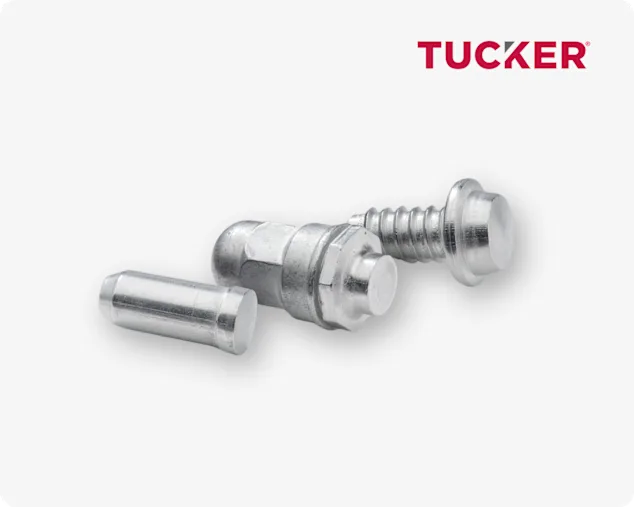
The unthreaded weld stud serves as a positioning pin or to hold clamping lock washers. It can be designed with or without a chamfer and offers high shear strength.
For fastening parts and components in areas subject to thermal stress, as a replacement for resistance-welded studs, pins, locking pins, and as an assembly aid.
Materials:
- Steel wire 4.8 and 6.8 per DIN ISO 898 Part 1
- Stainless steel wire A2 and F1 per DIN 267 Part 11
Finishes:
- Plain, copper-plated
- Other materials and finishes available upon request
Grounding Studs with Plastic Cap
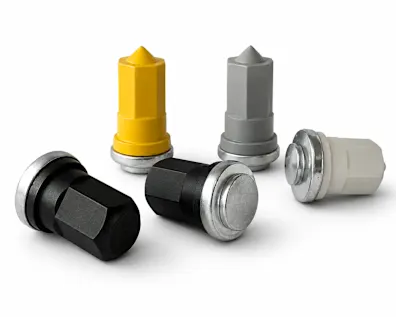
The plastic cover ensures automatic feeding of the weld studs and eliminates the need for manual sealing of the thread and stud flange prior to painting. After painting, the cover cap can be easily removed. The paint-free, flat contact surface on the large flange ensures an optimal ground connection. Supporting the component on the large flange allows for high torque loads—even with thin sheet metal materials. This also prevents material fatigue.
For ground connections of electrical components, for components subject to high torques, conductive and non-conductive modules, and for mounting electrical control devices.
Materials:
- Steel wire grades 6.8 and 8.8 per DIN ISO 898 Part 1
- Stainless steel wire grades A2 and F1 per DIN 267 Part 11
- Cover cap: Polyamide PA 66, color-coded
Finishes:
- Plain, nickel-plated, copper-plated, tin-plated, zinc-plated
Grounding Studs with Collar Nut
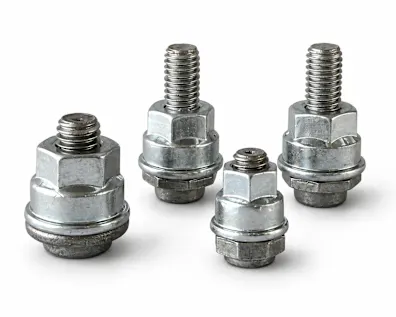
The pre-assembled flange nut eliminates the need to manually cover the thread before painting. Afterward, the nut can be used for fastening. As with studs featuring plastic caps, this solution provides an optimal ground connection, high torque capacity, and prevents material fatigue. The flange nut can be easily removed and reused after painting.
For grounding electrical components, for fastening components with high torque requirements, and for conductive and non-conductive modules, sensors, and control devices.
Materials:
- Steel wire grades 6.8 and 8.8 per DIN ISO 898 Part 1
- Stainless steel wire grades A2 and F1 per DIN 267 Part 11
Finishes:
- Studs: tin-plated, zinc-plated, copper-plated
- Flange nut: zinc-plated
- Other materials and finishes available upon request
Grounding Studs with Cap Nut
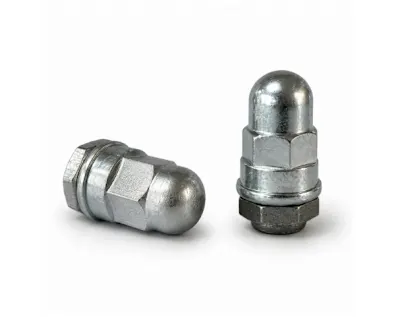
The pre-assembled cap nut eliminates the need to manually cover the thread before painting. Afterward, the nut can be used for fastening. Like the other Tucker ground weld studs, this solution provides an optimal ground connection, increased torque capacity, and prevents material fatigue. Here, too, the cap nut can be easily removed and reused after painting.
For grounding electrical components, for fastening components with high torque requirements, and for conductive and non-conductive modules, sensors, and control devices.
Materials:
- Steel wire grades 6.8 and 8.8 per DIN ISO 898 Part 1
- Stainless steel wire grades A2 and F1 per DIN 267 Part 11
Finishes:
- Studs: tin-plated, zinc-plated, copper-plated, titanium
- Flange nut: zinc-plated
- Other materials and finishes available upon request
T-Studs
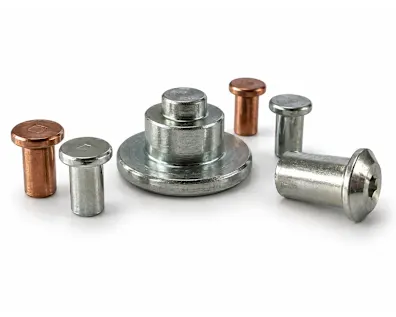
This type of stud, named for its shape, is welded at the shank. The head thus serves as a locking mechanism for metal or plastic fasteners. Due to its dimensions, the T-stud can be used even where installation heights are limited. It is particularly suitable for fasteners that are subjected to high pull-out forces. The studs can be painted and coated with a surface protection against corrosion.
For fastening plastic clips, cable holders, pipe clamps, trim strips, and paneling.
Materials:
- Steel wire 4.8 per DIN ISO 898 Part 1
- Stainless steel wire A2 per DIN 267 Part 11
Finishes:
- Plain, copper-plated, zinc-plated
- Additional materials and finishes available upon request
Eco-Stud
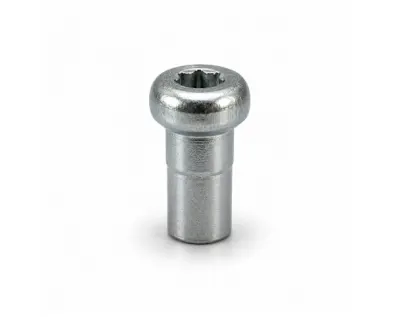
One stud type for all fastening applications. The Eco weld stud is welded to the component at the shank, and its head and shank geometry allow it to be used with a wide variety of component types. The Eco-Stud is particularly suitable for fasteners that are subjected to definable pull-out forces and where assembly tolerances must be compensated for. It can be used even with low installation heights and can be coated with a protective finish to prevent corrosion.
For fastening plastic clips, cable holders, pipe clamps, trim strips, panels, and coverings.
Materials:
- Steel wire 4.8 per DIN ISO 898 Part 1
- Aluminum ALMG
Finishes:
- Plain, copper-plated, zinc-plated, titanium
- Additional materials and finishes available upon request
Special Studs
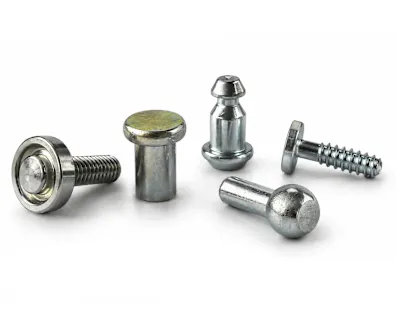
Tucker offers a variety of specialty studs for other applications. Metal or plastic components can be secured to the thread using a metal nut; the stud may be designed with or without a chamfer to aid in nut insertion.
Ideal for fastening components, as a replacement for insert screws, unsafe spark-ignition welding studs, and for fastening in areas subject to thermal stress.
Materials:
- Steel wire 4.8 and 6.8 per DIN ISO 898 Part 1
- Stainless steel wire A2 and F1 per DIN 267 Part 11
- Aluminum wire AlMg per DIN EN 1301-2
Finishes:
- Plain, copper-plated, zinc-plated
- Other materials and finishes available upon request