Blind Rivet Nuts: How They Work, Advantages and Proper Selection in Practice
Blind rivet nuts are indispensable in modern fastening technology. Learn how they work, when they are used, what variants are available, and what to consider when selecting and installing them.
What Are Blind Rivet Nuts?
Blind rivet nuts are fastening elements that enable the creation of load-bearing threads in thin-walled components – such as sheet metal, profiles, or housings. The key advantage: they are installed from one side (blind), meaning no access to the rear side of the component is required.
Typical applications include:
thin sheet metal without sufficient thread depth
hollow profiles or closed housings
applications where subsequent screwing is required
After installation, a fully functional thread is available into which screws can be inserted or removed at any time.
Why Use Blind Rivet Nuts?
In many applications, conventional bolt-and-nut combinations or thread-cutting cannot be used effectively. Blind rivet nuts solve several challenges simultaneously:
One-Sided Accessibility
Especially with hollow profiles or closed constructions, only one side is accessible. Blind rivet nuts can be installed completely from the front side.
Suitable for Thin Materials
Where material thickness is insufficient for a tapped thread, the rivet nut creates a stable counter-thread. Special solutions are also available for porous materials and sensitive surfaces to protect the base material.
High Process Reliability
Compared to screw-in, welded, or press-fit nuts, the installation process is simpler, more reproducible, and usually more cost-effective.
Permanent, Non-Detachable Connections
Through form-fitting or deformation of the blind rivet nut, a firm and permanent connection is created that does not loosen even under shocks and vibrations.
Multi-Material Combinations
Unlike welded connections, blind rivet nuts can be used regardless of the material pairing.
Flexibility in Assembly and Service
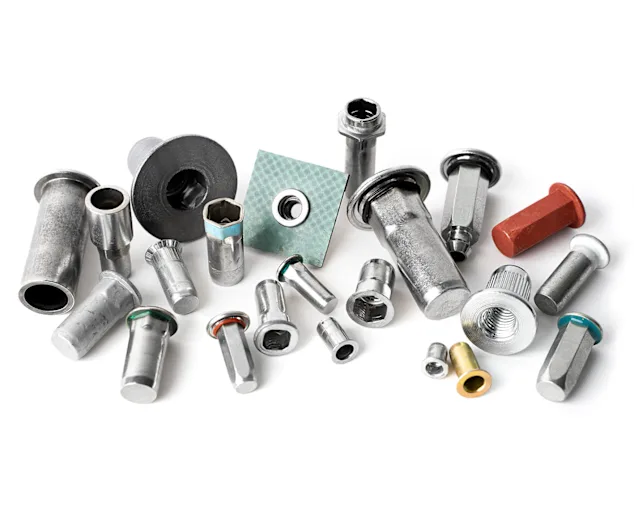
Blind rivet nuts are available in numerous designs and materials. Nuts with a large grip range provide particular flexibility, meaning they can be used for various applications with different material thicknesses.
Installing Blind Rivet Nuts
YouTube Consent Required
This video is hosted by YouTube and requires Marketing Cookies to be accepted. Please accept Marketing Cookies to view the content.
How the Installation Process Works
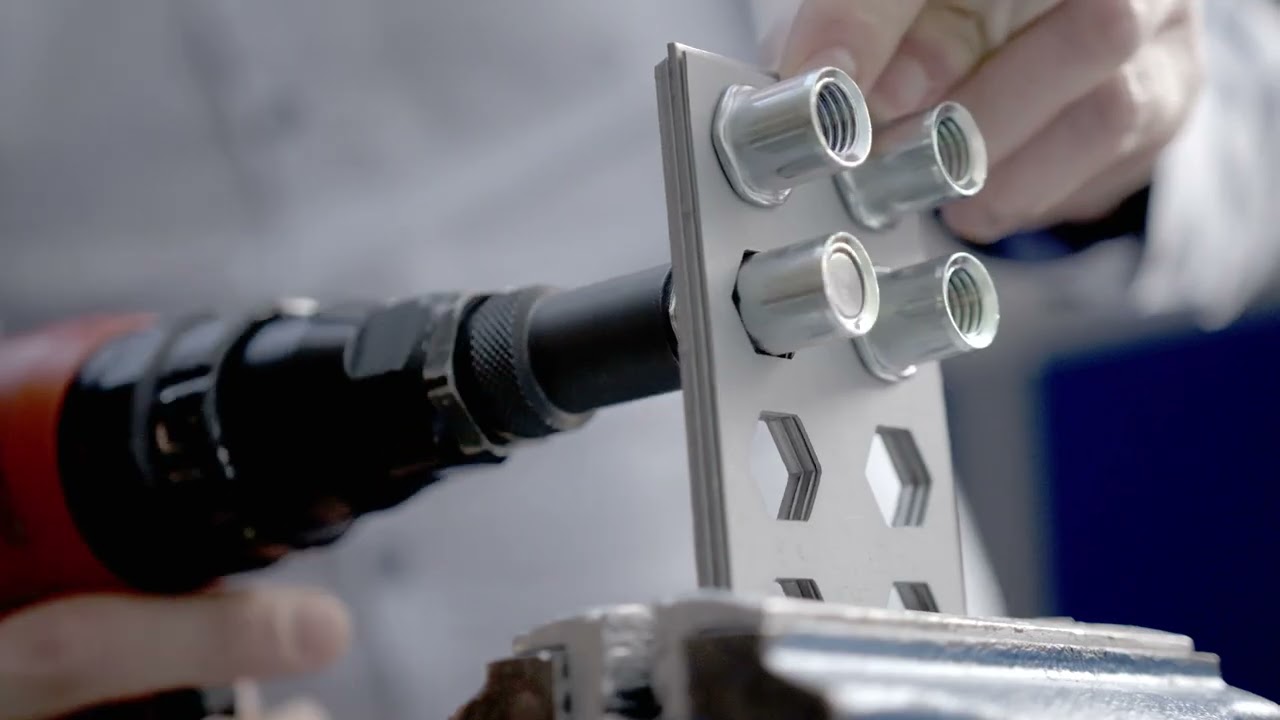
The installation process of a blind rivet nut is technically simple but requires precision:
Preparing the pilot hole: The hole is punched or cut with a laser and must fall within defined tolerances.
Screwing in the installation tool: The installation tool engages with the internal thread of the blind rivet nut.
Pulling in the nut: The nut is pulled axially. In the process, the shaft deforms and forms a bulge on the rear side.
Form-fit in the base material: The bulge clamps the material between the head and the flared section – the thread is secured and load-bearing.
Modern setting tools operate with force or displacement control to minimize material deformation and ensure consistent quality.
What Types of Blind Rivet Nuts Are Available?
The selection of the right rivet nut depends heavily on the application. Important distinguishing features are:
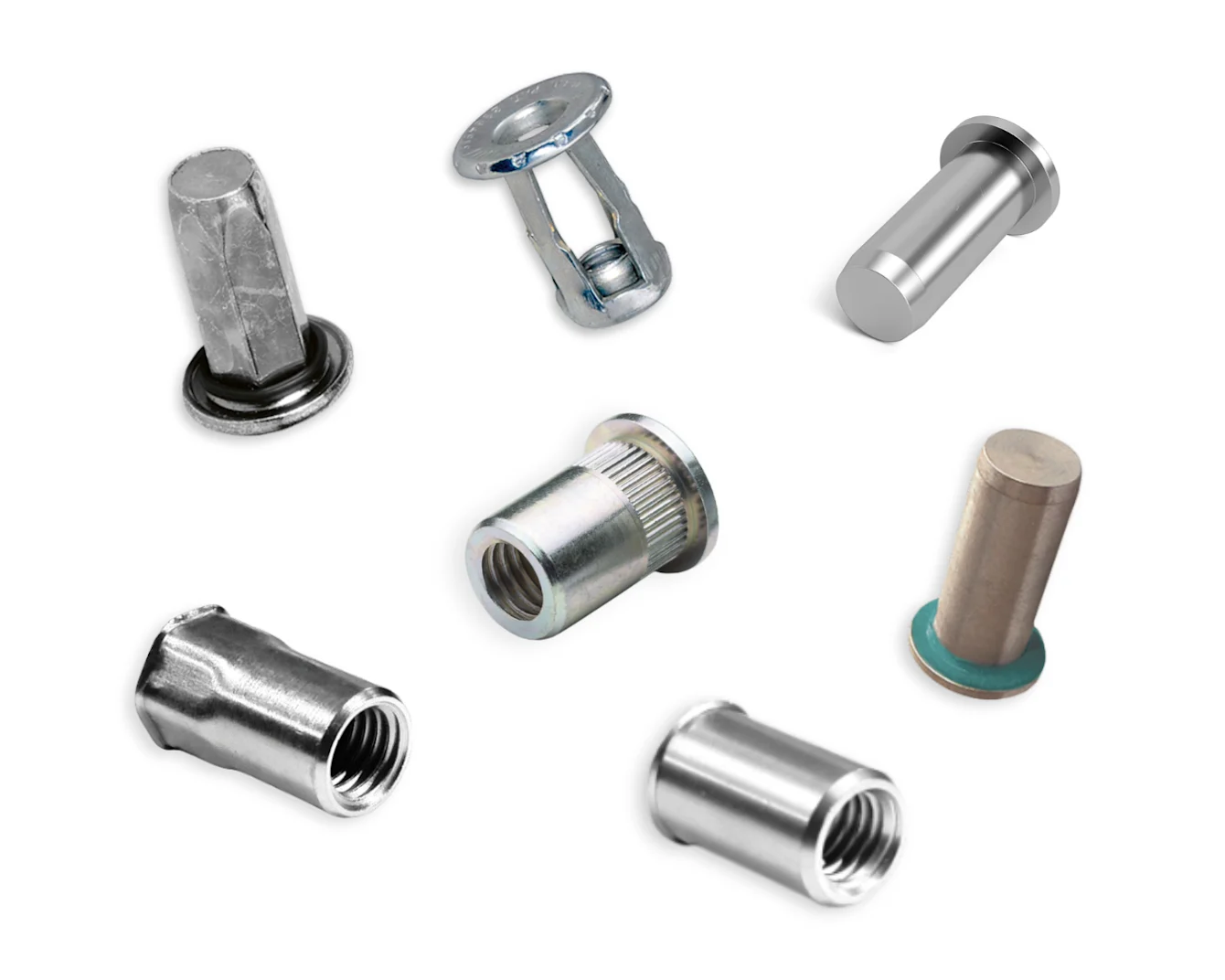
Shaft Geometry
Round shaft: suitable for one-time or infrequent disassembly
Knurled round shaft: The grooves on the outer surface provide stronger clamping of the base material during compression, which increases rotation resistance.
Hexagonal shaft: offers additional form-fit connection and thus higher rotation resistance, ideal for frequent screw connections.
Head Shape
Flat head / Flange head: higher shear strength, robust
Countersunk head: flush surface with limited installation space
Grip Range
Blind rivet nuts are designed for specific material thickness ranges (e.g., 0.5–3 mm or 3–6 mm). The correct length is crucial for a secure connection.
Material
Stainless steel (e.g., A2, A4) for high corrosion resistance
Steel with coating (e.g., zinc-nickel) for cost-effective solutions
Aluminum for special lightweight construction applications
Buy Blind Rivet Nuts
Discover our wide selection of blind rivet nuts in various materials and designs and buy directly online.
Blind rivet nuts are typically designed for screw connections of strength class 8.8. For higher requirements (e.g., 10.9 or 12.9), special designs with longer thread engagement and adapted geometry are used.
Important: There is no uniform DIN or ISO standard for rivet nuts. Test procedures and characteristic values may vary depending on the manufacturer.
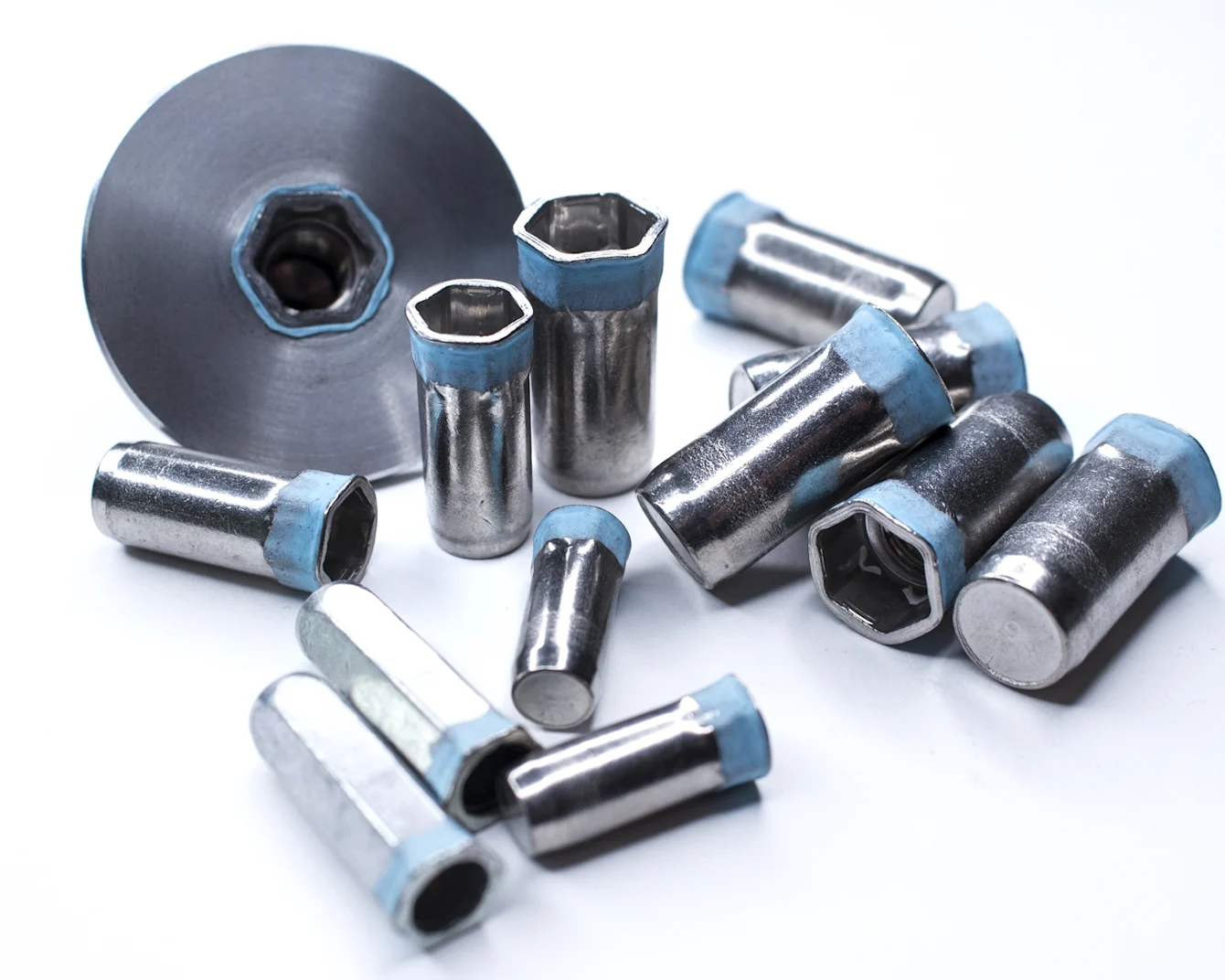
Sealing: Blind Rivet Nuts for IP-Protected Applications
For applications in damp or wet environments – such as electronic enclosures – sealing blind rivet nuts are available. These are characterized by:
a closed base
integrated underhead coating
a defined setting process
This enables protection classes up to IP67 or IP68, provided the pilot hole is executed correctly and the nut is installed properly.
Typical Applications
Blind rivet nuts are used today in many industries, including:
Automotive
Railway and transportation technology
Mechanical and plant engineering
Housing and electronics construction
Grounding and contact applications
Even custom solutions – such as those featuring hose fittings, grounding contacts, or special thread types – can be realized even in small quantities.
Conclusion: Using Blind Rivet Nuts Correctly Pays Off
Blind rivet nuts are high-performance fastening elements that, when properly designed, enable reliable, durable, and service-friendly screw connections. The keys to success are:
the appropriate geometry
the right material
a clearly defined installation process
suitable installation tools and process control
Those who consider blind rivet nuts holistically – from design to assembly – benefit from high quality, low error rates, and economical processes.
The Right Blind Rivet Nut for Your Application
Our experts are happy to support you in finding the right solution. Send us a message.