
Industry Spotlight

5 Engineering Challenges Quietly Limiting Data Center Reliability

Data centers are often described as digital infrastructure. Behind the software, processors, and networking equipment lies a complex mechanical ecosystem operating continuously under pressure. Discover the five main challenges.

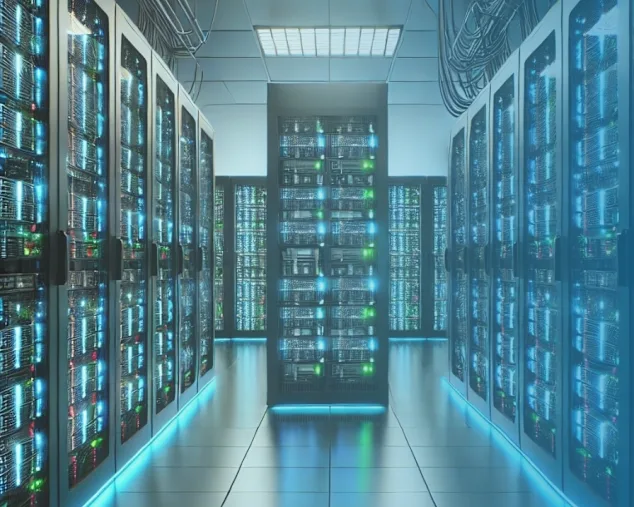
An AI server standing in a big server room

You Have Questions About Our Services?

As demand for cloud computing, artificial intelligence, and high-performance services grows, data centers are becoming denser, hotter, and more power intensive than ever before. While performance continues to increase, the margin for physical reliability is becoming smaller.

In many cases, reliability issues do not appear as sudden failures. They develop gradually through small inconsistencies in design, assembly, and maintenance that accumulate over time.

Blue thermal management icon

1. Thermal Stress Is Becoming Harder to Control

As rack power density increases, cooling systems are operating closer to their limits. Even small airflow disruptions caused by panel misalignment, obstructed airflow paths, or inconsistent assembly can reduce cooling efficiency over time.

To support more stable thermal performance, manufacturers are increasingly adopting fastening and mounting solutions designed for high-density cooling environments, including captive panel screws, liquid cooling assemblies, and airflow-optimized mounting systems.
Blue mechanical stress icon

2. Mechanical Stress Gradually Impacts Infrastructure Stability

Modern racks and enclosures are exposed to continuous vibration, increasing equipment weight, and constant airflow from high-speed cooling fans. Over time, these conditions can affect structural stability and fastening integrity.

To improve long-term reliability, manufacturers are implementing anti-vibration fastening solutions and high-strength assembly components designed to maintain clamp load stability under continuous operational stress.

Blue maintenance and downtime icon

3. Maintenance Complexity Introduces Hidden Risk

Data centers are no longer static installations. Hardware is regularly upgraded, replaced, and reconfigured to support changing workloads and evolving technologies. As infrastructure density increases, servicing becomes more challenging. Tight installation spaces and complex assembly structures can extend maintenance windows and increase the likelihood of human error during replacement or repair activities.

To simplify servicing and improve assembly consistency, manufacturers are increasingly adopting service-friendly fastening solutions such as tool-less fastening systems, captive hardware, and standardized mounting components. Specialized engineering support, such as our Assembly Technology Expert Services, can help further optimize assembly processes, improve installation reliability, and reduce maintenance complexity in high-density environments.

Blue signal and power reliability icon

4. Power and Signal Reliability Face Greater Demands

As power density increases across servers, storage systems, and networking equipment, electrical connections are exposed to greater thermal and mechanical stress. Loose or inconsistent connections can gradually generate excess heat, increase resistance, and affect long-term electrical stability. At the same time, rising data rates place greater demands on signal integrity across modern infrastructure platforms.

To support reliable performance, manufacturers are increasingly implementing precision fastening and connection solutions for PCB assemblies, busbars, power distribution systems, and cable management infrastructure.

Blue scalability and supply chain icon

5. Scalability Magnifies Small Inconsistencies

What appears manageable within a single deployment can become difficult to control across multiple facilities or global operations. Small variations in assembly practices, component selection, or infrastructure design can multiply at scale, making consistency harder to maintain as deployment speed increases.

To support scalable growth, manufacturers are increasingly adopting standardized component strategies and Smart Factory solutions that improve inventory visibility, reduce supply chain complexity, and maintain assembly consistency across multiple locations. By combining smart logistics with digital inventory management, engineering teams can improve traceability, reduce variability, and support more predictable infrastructure expansion.

The Takeaway

The common thread across these challenges is that data center reliability is rarely determined by a single technology or component. Instead, it is shaped by thousands of small engineering decisions related to design, assembly, thermal management, serviceability, and long-term operational consistency.

When these decisions are made deliberately, reliability becomes more predictable and scalable. When overlooked, small issues can quietly accumulate until they become difficult and costly to resolve.

Fasteners icon

Fastening Solutions for Data Centers

Find out more about fastening solutions for data center applications, from server racks, power distribution and cable routing to motherboard and PCB fasteners and cooling systems.

Learn More