Digital Transformation in Manufacturing: How to Close the Final Gap
Many manufacturing companies are investing in digitalization – but the greatest efficiency gains are only realized when the shop floor and material logistics are seamlessly integrated. We’ll show you how – in a modular, measurable, and scalable way.
Where Digitalization Really Matters in Manufacturing
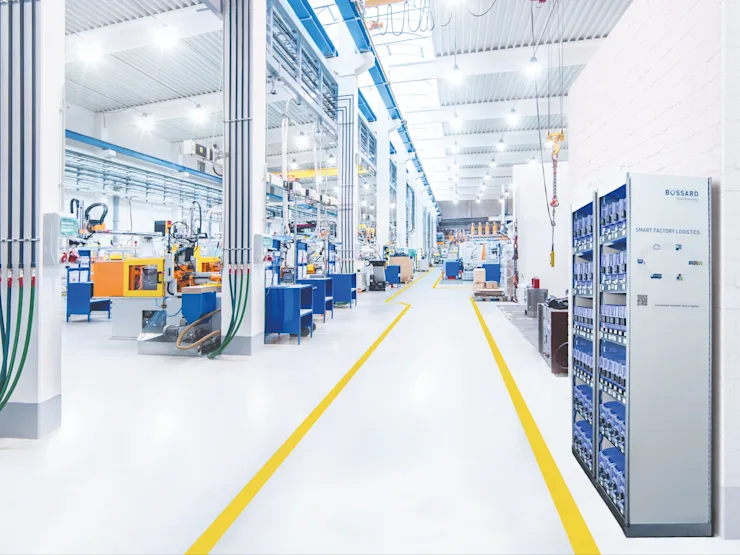
Digital systems such as Enterprise Resource Planning (ERP), Manufacturing Execution Systems (MES), and Product Lifecycle Management (PLM) form the backbone of production planning and master data. However, gaps in implementation often remain during day-to-day operations: paper-based work instructions, manual data entry, lack of traceability, or unreliable material supply. This is exactly where errors, wait times, and rework occur. Digitizing these processes and implementing smart logistics bring this potential to the shop floor.
What Can ERPs, MES, and PLMs Do – and Where Do Their Capabilities End?
To better understand the digital transformation of manufacturing, it helps to take a brief look at the key IT systems used in nearly every production facility today. Many people are familiar with these terms – but it’s not always clear exactly what role they play or where their limitations lie.
ERP: Enterprise Resource Planning
An ERP system manages core business processes:
Customer orders
Material requirements
Suppliers
Inventory
Purchasing and financial flows
In short, the ERP system determines what should be produced – including bills of materials, requirements, and inventory.
MES: Manufacturing Execution System
The MES links planning and production. It controls and monitors active production orders:
Which orders are active?
Which workstation is producing which step?
What status updates are available?
The MES displays progress, records status updates, and thus serves as the management layer of the shop floor.
PLM: Product Lifecycle Management
The PLM manages all product data throughout the entire lifecycle, including
CAD drawings
bill of materials (BOM)
variants
and engineering changes.
The PLM defines how a product must be built – both technically and in documentation.
Why a Gap Remains Despite ERP, MES, and PLM
Systems like ERP, MES, and PLM provide planning, data, and structure. But they don’t execute the process on the shop floor. There is a gap between the digital planning level and actual execution. This is particularly true for manual assembly processes and in materials logistics.
What does this mean in practice?
Work instructions are often out of date.
Process data is recorded manually. This is error-prone and occurs with a time delay.
Material availability is estimated rather than measured in real time.
Relevant process data is only recorded after the fact, which means traceability is not available during actual execution.
This gap can only be closed with systems that are used directly at the workplace and in logistics and can operate there – exactly where value is created. And this is where the bridge to digital worker guidance and smart material logistics becomes visible.
The execution gap can only be closed through systems that actively engage directly at the workplace and in logistics – precisely where value creation occurs.
From Planning to the Shop Floor
The practical essence of Industry 4.0 lies not in the mere digitization of work instructions or data, but in the end-to-end networking and digitization of as many business processes as possible – from planning all the way through to the actual execution of work steps on the shop floor.
Four key technological components are crucial here:
Connecting of workstations, tools, and material flows
Real-time data collection instead of time-delayed manual logs
Digital, flexible work instructions for manual assembly processes
Automated, consumption-based material supply right to the point of actual use
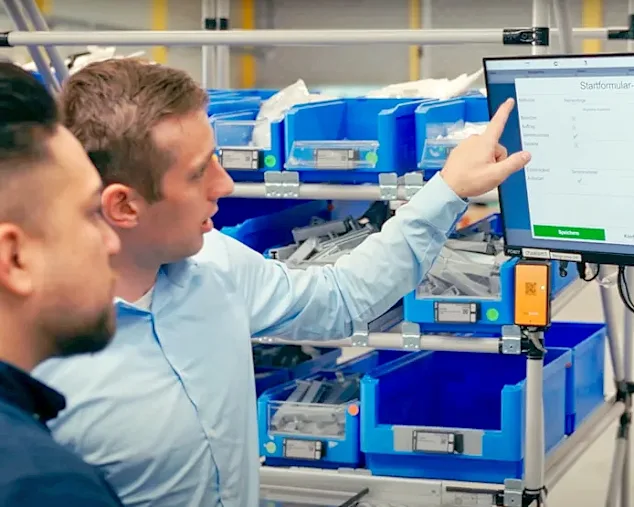
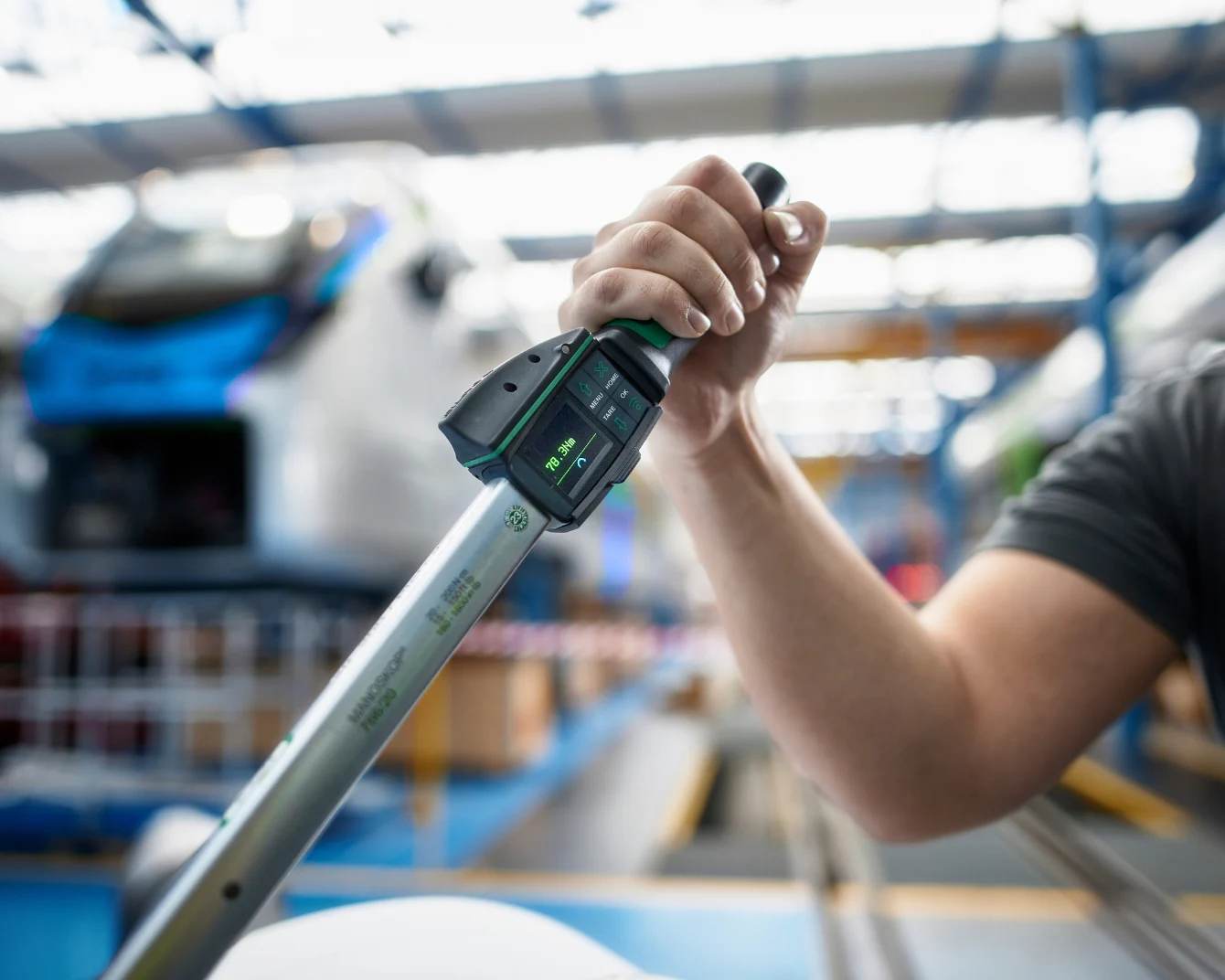
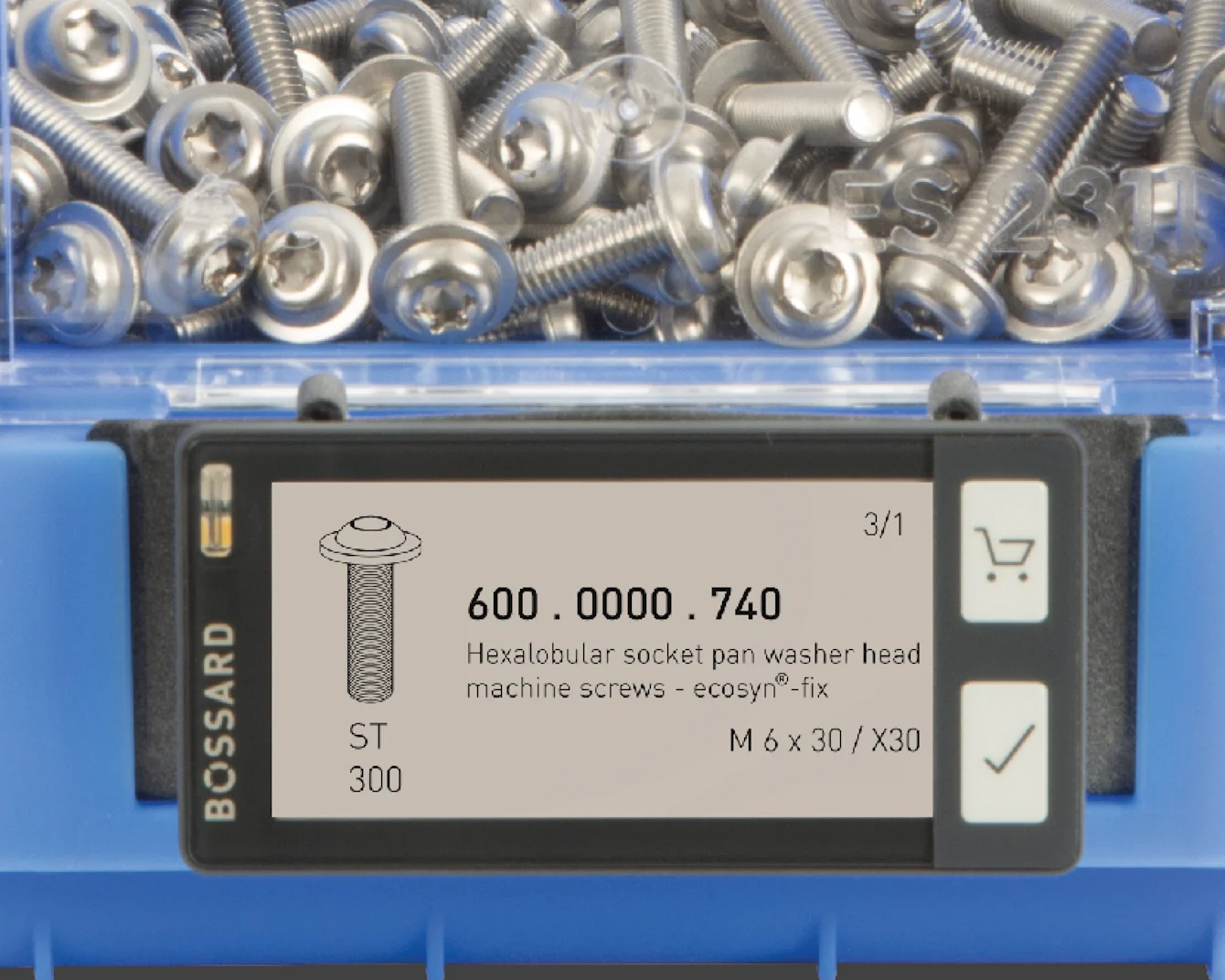
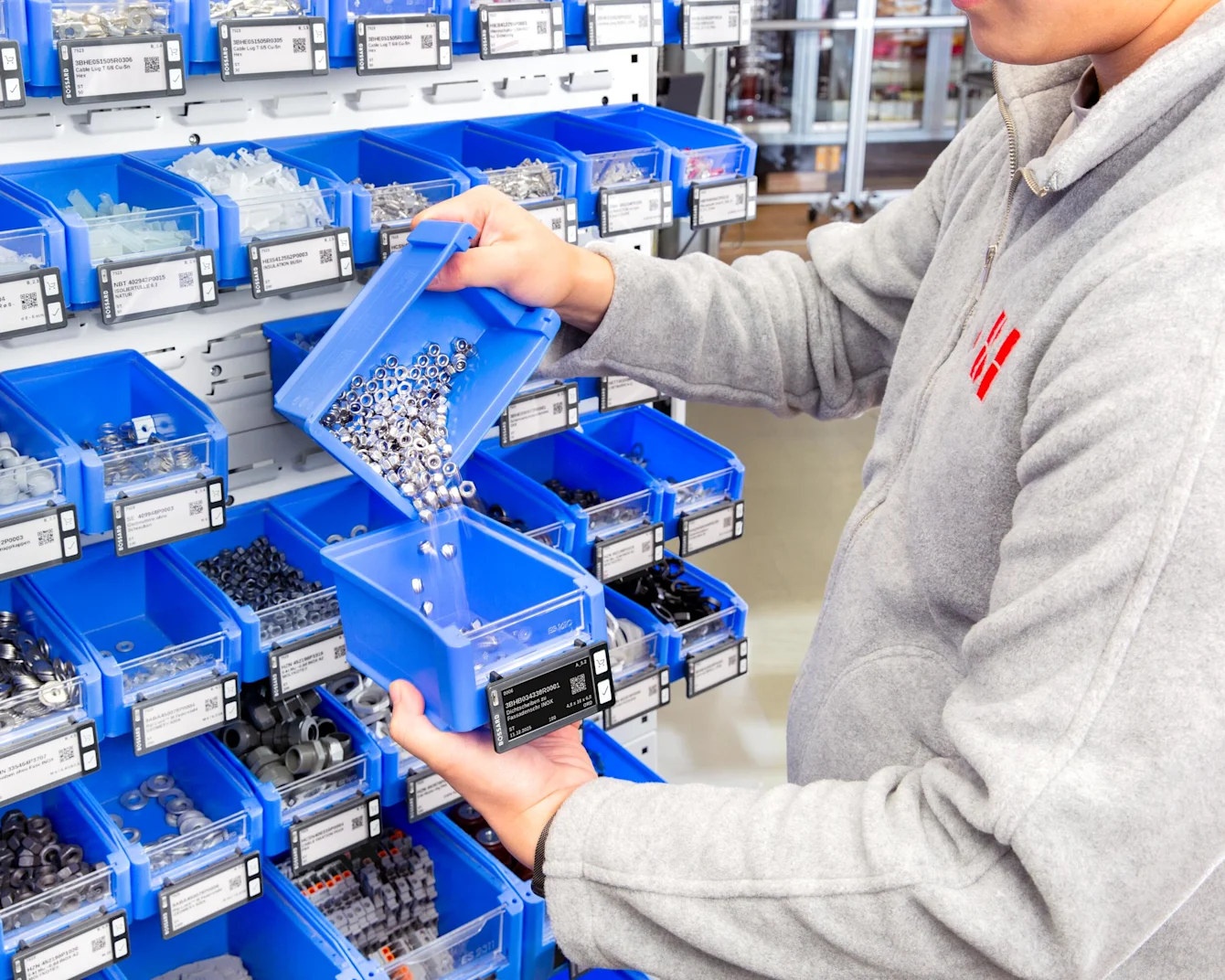
This is made possible through technologies and tools such as the Internet of Things (IoT), smart tools (such as Bossard SmartTools or digital torque wrenches), intelligent material containers (such as Bossard SmartTower, SmartBin Cloud or SmartLabel Cloud), AI technology, as well as scanners, sensors and scales.
These solutions are equipped with sensors and connected via the cloud. They can capture information such as torque, number of parts removed, position, time of fastening, temperature or fill levels and transmit it directly to digital systems.
The goal is not "more IT", but stable, standardized and guided processes that remain reproducible, transparent and traceable despite product variety, small batch sizes and high cycle requirements, and can be seamlessly integrated into existing ERP, MES and PLM landscapes.
ELAM Solutions: Software for Digital Worker Guidance in Assembly
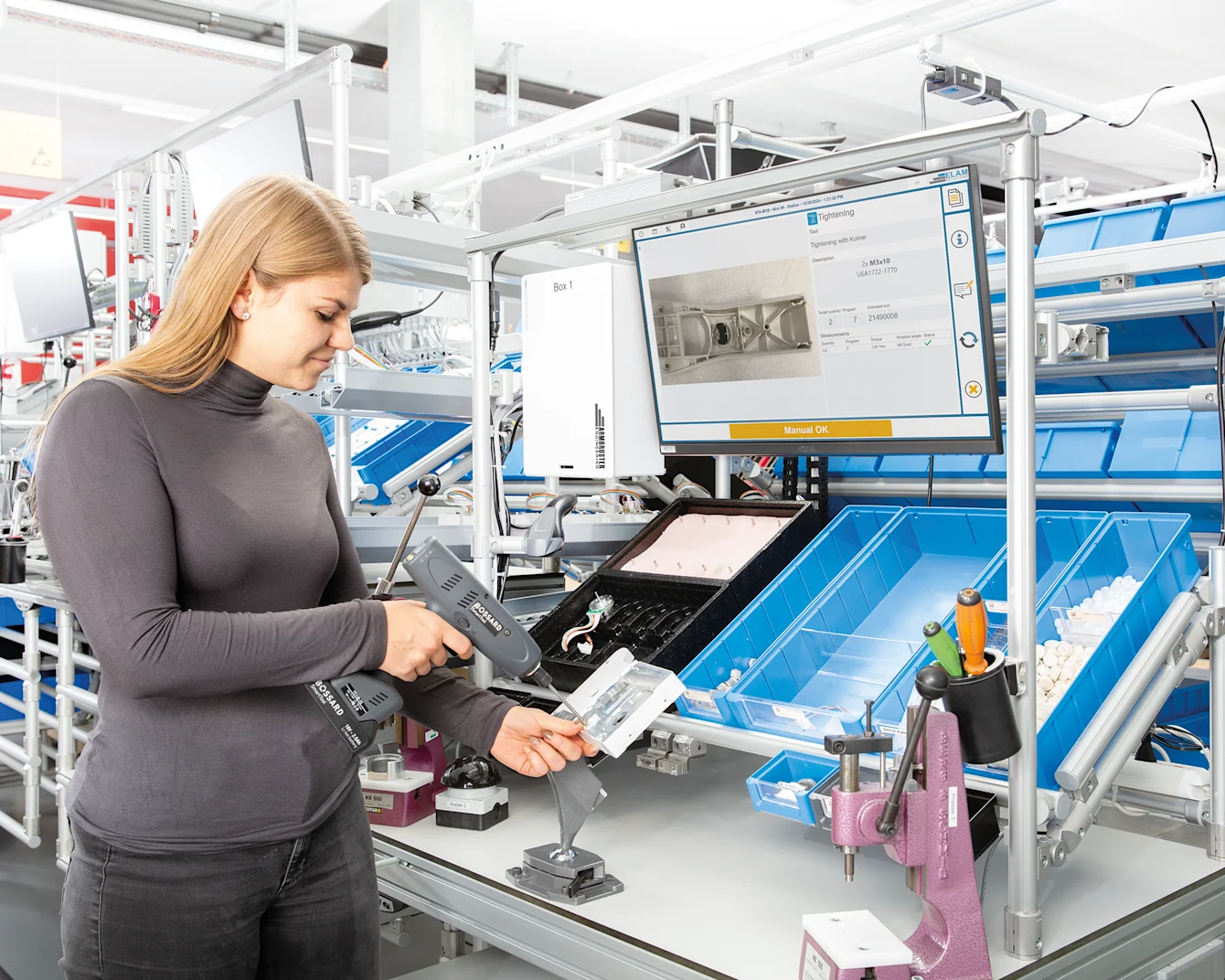
One example is ELAM – a software solution for digital work instructions and worker assistance in manual assembly. ELAM Solutions supports employees directly at their workplace and ensures that assembly processes are executed in an understandable, standardized, and correct manner. Even with high product variant diversity.
Instead of paper-based documents or static PDFs, digital assembly instructions are used here, which guide employees step by step through the assembly process. Texts, images, and videos explain each work step clearly and comprehensibly. Individually adapted to product variant, order, or workstation.
What distinguishes ELAM from traditional digital instructions: The software accompanies the entire assembly process from start to finish and does so in real time.
How does this work in practice?
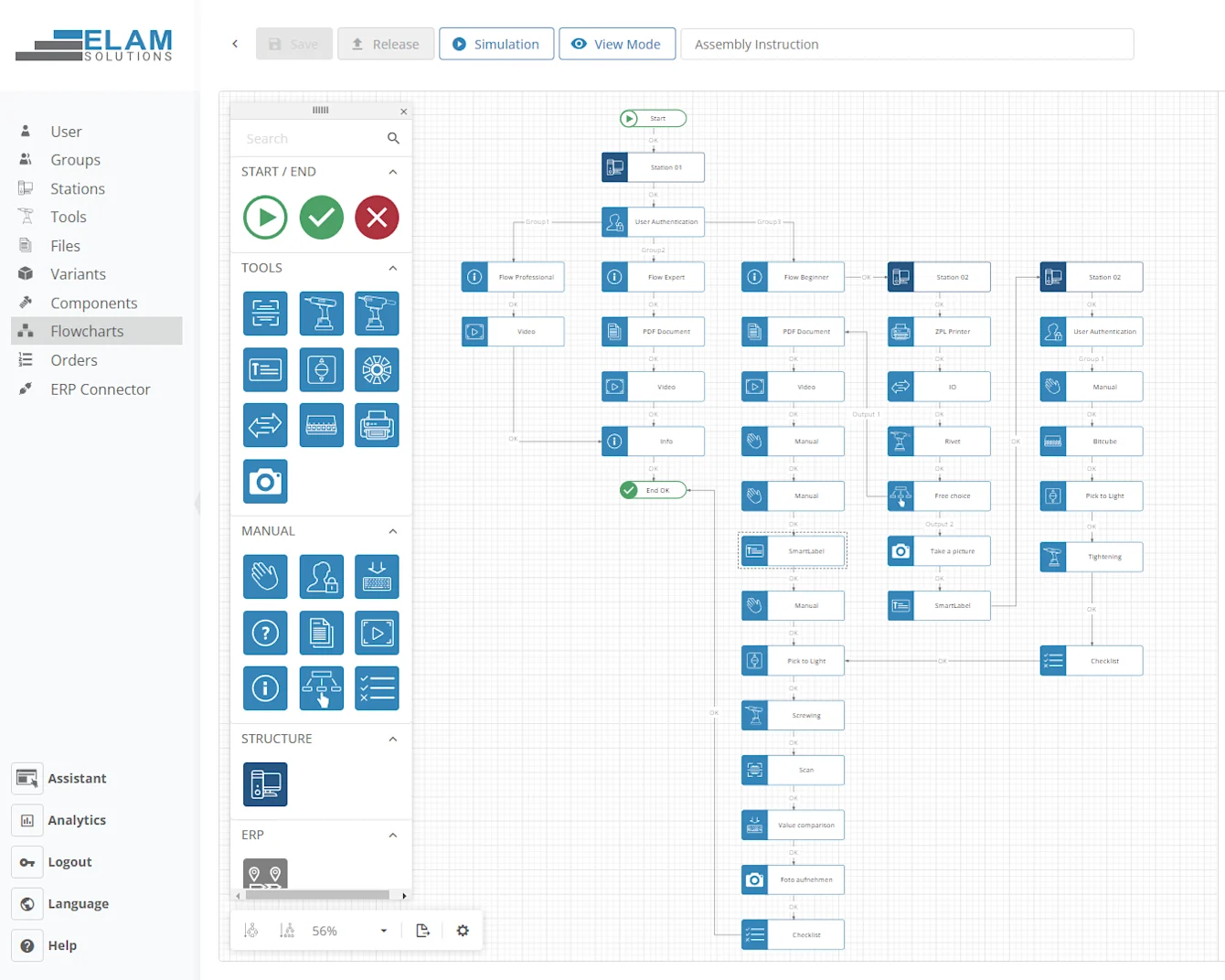
Before a product is assembled, the required work steps are first defined centrally in a so-called flowchart editor within ELAM. In this process, process managers specify the order of operations, what information is displayed, which steps are mandatory, and which steps, if any, must be manually confirmed by the employee. The easy-to-understand, no-code user interface requires no programming knowledge.
When an assembly order starts later, the worker logs in at the workstation using their own credentials. ELAM stores which product and variant are to be assembled and displays the corresponding digital assembly instructions.
As the employee works, the ELAM software guides them step by step through the process. The next step only appears once the previous one is completed. This ensures that no assembly steps are forgotten or mixed up – regardless of experience or routine.
Quality and Documentation During Work
Parallel to worker guidance, ELAM captures relevant production and quality data directly during assembly. This can be done using screwdriving tools, scanners, or other connected devices. Results such as correct torque, a successfully completed screwing operation, or a correctly removed component are automatically saved without additional manual input.
For the employee, the process remains simple: work as usual, but with clear digital support. For the company, this creates complete traceability in production in the background:
which work step was performed when,
at which station,
with which component or tool,
and whether it was completed correctly.
The Result: Real-Time Transparency
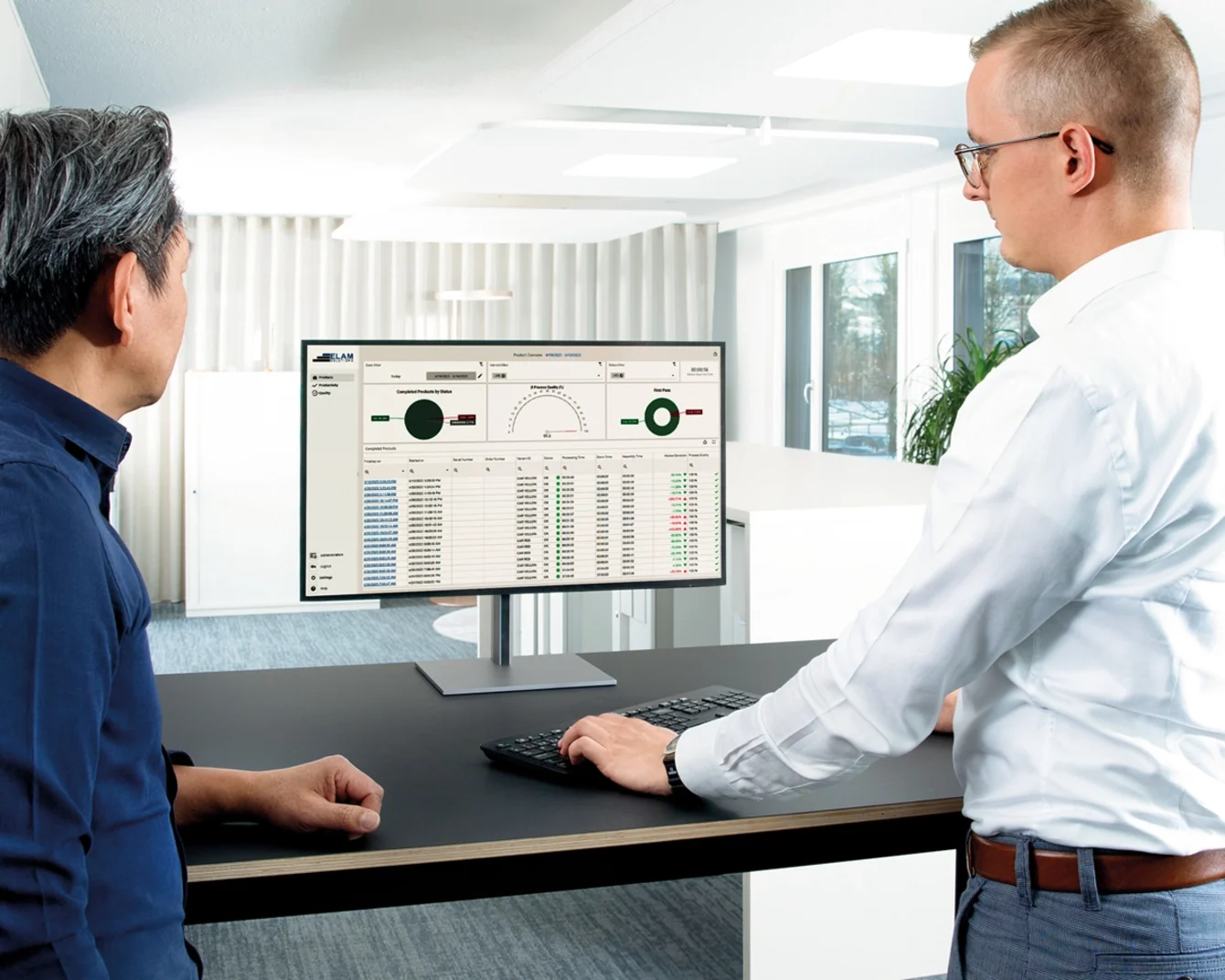
All captured information is available in dashboards for production. Production managers can see at a glance the status of orders, where delays are occurring, or where processes can be optimized. The data is generated automatically during operations – without any additional documentation effort.
Smart Production Logistics and Real-Time E-Kanban
While ELAM controls the digital execution of assembly, software such as Last Mile Management specifically addresses the digitalization of production logistics – particularly for B and C-parts.
Bossard's Last Mile Management is a software solution for the digital control of materials and consumables in production. It ensures that assembly materials are available at the right time, in the right place, and in the right quantity.
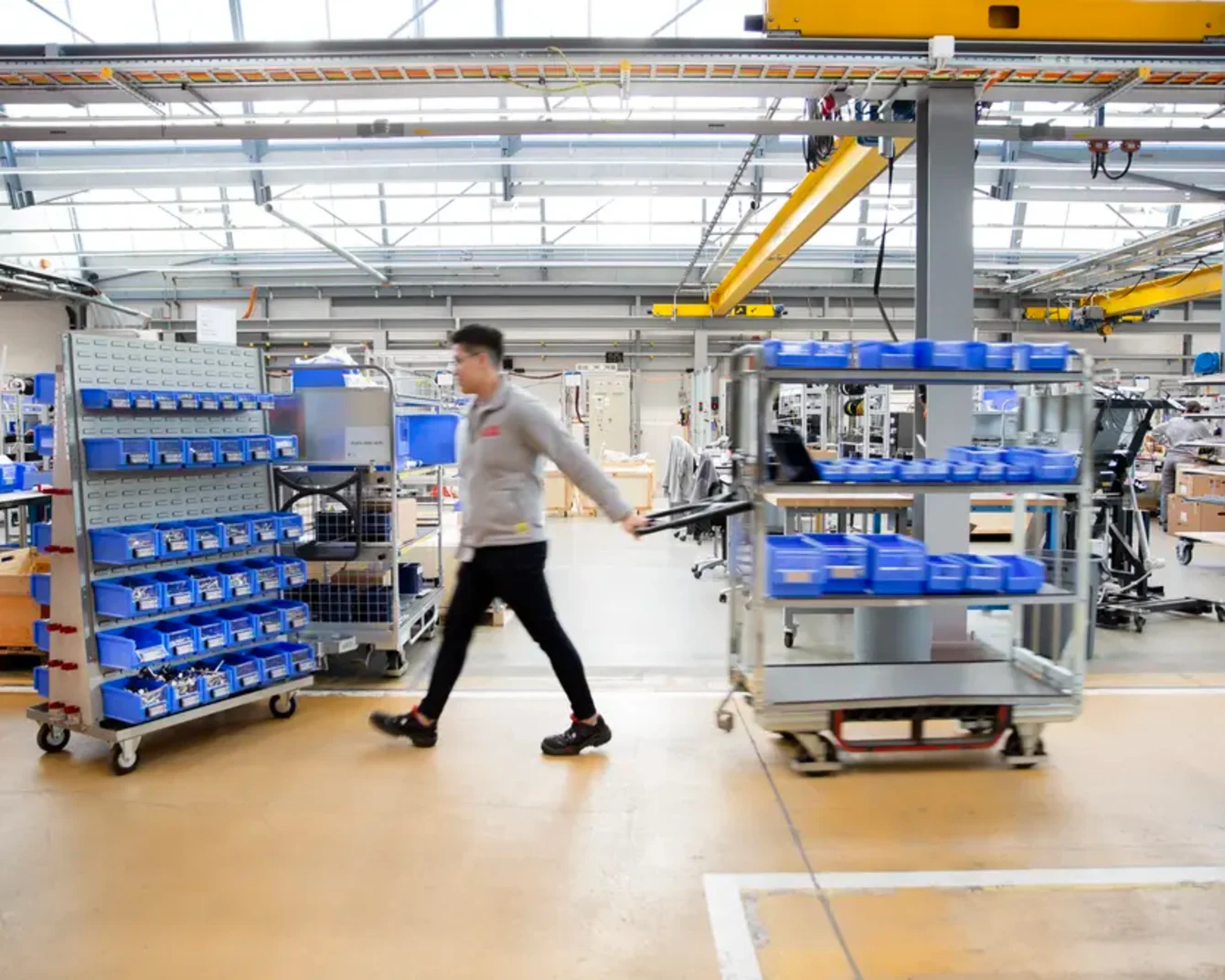
Many companies are familiar with the problem: materials are somewhere in the warehouse, but not where assembly is currently taking place. Assembly workers search for parts, Kanban cards get lost, or inventory is reordered too late. Last Mile Management addresses precisely this issue – directly at the point of consumption.
A Look at Everyday Production
Material containers, storage locations, and consumption points are set up during software implementation. This process determines which parts are needed where and in what quantities they are typically used. This is a one-time step that forms the foundation for digital material control.
During the assembly process, the employee simply takes the required parts from the designated containers as usual. For them, the workflow remains virtually unchanged – they continue to focus on their assembly task.
The key difference happens in the background: Last Mile Management automatically detects when material is taken and how much has been used. This occurs directly at the point of use, for example via scales or the smart container label.
Material Replenishment Happens Automatically – Without Forms or Verbal Requests
As soon as a defined minimum stock level is reached, the system automatically triggers replenishment. No forms need to be filled out, no Kanban cards are passed along, and no employee needs to notify anyone.
Last Mile Management knows:
which container needs to be refilled with which parts
how much material is required
where it should be delivered
Replenishment is initiated accordingly – based on actual consumption, not on estimates or fixed cycles.
Transparency Instead of Inaccurate Estimates
At the same time, Last Mile Management continuously collects data on material consumption. Production managers can see at a glance:
which parts are used particularly frequently
where inventory is building up
where bottlenecks might arise
which parts are no longer being used
This information is available in near real time and enables targeted optimization of material flows – without additional counting or Excel spreadsheets.
Last Mile Management in Conjunction with Assembly
While ELAM guides employees step by step through the assembly process, Last Mile Management ensures that the required material is available at all times. Both systems work together seamlessly in daily operations:
ELAM ensures a stable, guided assembly process
Last Mile Management guarantees efficient material supply to assembly, without production interruptions.
This creates a continuous, digitally supported production workflow – from work instructions to material supply directly at the workstation. With increasing product variety, smaller batch sizes, and high time pressure, this quickly becomes a success factor.
Digital Worker Guidance and Intelligent Material Logistics Have Greater Impact Together
While ELAM digitally supports the actual assembly process, Last Mile Management ensures that the necessary materials are available at all times. Together, they bridge the gap between planning and assembly and ensure traceability in production. The roles of the individual systems can be clearly distinguished:
Product data such as drawings or bills of materials come from the PLM. ERP and MES systems plan orders, quantities, and deadlines. ELAM implements this planning at the workstation, guides employees step by step through the assembly process, and documents the process in real time.
At the same time, Last Mile Management ensures that the required materials are replenished exactly when they are actually consumed. It thus manages the intralogistics for all necessary components.
The key advantage: All parties involved work with the same up-to-date information. Assembly progress, quality data, and material consumption are transparent and interconnected. This creates a seamless digital cycle.
Measurable Outcomes in Four Key Areas
Outcome 1
Inventory
and material availability
Outcome 1
Real-time Kanban and consumption tracking at the point of use reduce inventory while increasing availability.
Outcome 2
Productivity
and cycle time stability
Outcome 2
Reduced search times, automatic data capture, and clear instructions stabilize cycle times – even with high variant production.
Outcome 3
Quality
and compliance
Outcome 3
Guided steps, checkpoints, and automatic documentation reduce error rates and audit efforts.
Outcome 4
Transparency
and traceability
Outcome 4
Series / batch data, tool values, times – all digitally linked and analyzable.
Quick Start Guide: How to Get Started the Pragmatic Way
Step – Prioritize Use Cases: Select 2–3 production lines or workstations with a high proportion of rework or setup time and bottlenecks in material supply.
Step – ELAM Proof-of-Concept: With ELAM, you can implement digital work instructions, link tools, automatically capture quality data, and enable feedback to your ERP/MES.
Step – Add Last Mile Management: Last Mile Management ensures that all necessary materials are available in the right quantity, at the right time, and in the right place. This prevents assembly interruptions and streamlines processes. The software helps you track point-of-use inventory in real time, digitize Kanban, automate replenishment, and analyze your consumption data.
Step – Scale and integrate: After a successful proof of concept, you roll out the cells, establish KPIs, and connect additional stations/locations – without replacing your existing systems. Digital worker guidance and smart material logistics grow alongside your existing IT infrastructure.
Conclusion: Digital Worker Guidance and Smart Material Logistics
Instead of replacing existing systems, ELAM and Last Mile Management specifically complement existing ERP, MES, and PLM systems where traditional solutions reach their limits: right on the shop floor. Digitalization can be launched in a modular fashion, expanded step by step, and scaled flexibly. This results in noticeably higher productivity in day-to-day production and a significant reduction in complexity.
Are You Ready for the Future of Manufacturing?
Your organisation can get these benefits in your assembly, too. Our team of experts is ready to guide you through every stage of implementation and our customer support is available whenever you need it.
Digital Transformation in Manufacturing: Frequently Asked Questions
Can solutions for digital worker guidance and smart production logistics replace my ERP/MES/PLM?
No. They complement your system landscape on the shop floor and close the gap between execution in assembly and material flow, while master and order data continue to come from ERP/MES/PLM.
Can I introduce these solutions separately?
Yes, digital work instructions and smart production logistics can be implemented independently of each other. Many companies initially start with ELAM to digitize assembly processes or with Last Mile Management to stabilize material supply. Both solutions deliver their greatest benefit when used together, but they are modularly designed and can be used individually.
How complex is the introduction of digital worker guidance?
The implementation is modular. You start with one line/station, integrate existing tools, and quickly obtain measurable results. After that, you can scale flexibly.
Do I need to replace my existing IT infrastructure?
No. Solutions like ELAM and Last Mile Management complement your existing ERP, MES, and PLM systems. They specifically supplement them where traditional systems reach their limits – directly on the shop floor and in material logistics. Existing IT landscapes can continue to be used and expanded step by step.